

Filter by


Hardness Rating
Thermal Conductivity
Color

Hardness
Dielectric Strength
Formulation
RoHS

Container Size
Manufacturer Model Number
Material
Maximum Temperature
Tensile Strength
Consistency
Overall Dry Time
Mixing Required
Clarity

Manufacturer
REACH
Minimum Temperature
Specifications Met
DFARS Specialty Metals
Export Control Classification Number (ECCN)
Mix Ratio
About Paint and Protective Coatings
More
Two-Part Silicone Potting Compounds
Encase electronic assemblies in a layer of silicone for protection from dust, moisture, mechanical shock, and vibration. Softer and more flexible than epoxies and urethanes with the widest temperature range, silicone potting compounds are the best choice for high-temperature applications and electronics exposed to thermal cycling. They have good moisture resistance but poor chemical and abrasion resistance. Silicones provide excellent electrical insulation. They’re also known as RTV (room-temperature vulcanizing).
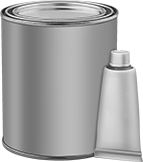
Can and Tube Compounds
Dry Time | ||||||||||||
|---|---|---|---|---|---|---|---|---|---|---|---|---|
| Mfr. Model No. | Container Size, fl. oz. | Consistency | Touch | Overall, hrs. | Dielectric Strength, V/mil | Thermal Conductivity, W/m-K | Temp. Range, °F | Specifications Met | For Use On | Color | Each | |
Momentive/GE Compounds—Medium Soft | ||||||||||||
| RTV11 | 16 | Thick Liquid | 90 min. | 24 | 515 | 0.29 | -65° to 400° | GSA A-A-56023A | Aluminum, Brass, Bronze, Copper, Steel, Stainless Steel | White | 00000000 | 0000000 |